
I’ve been working for the City of Waukesha, Wisconsin (the 7th largest municipality in the state) for nearly 4 years at the time of writing this. When I started, we had just started to come out of the pandemic and Waukesha had just completed building a new state-of-the-art City Hall. While it is a lovely, modern, brutalist-ish style building, my mission from very early on was making sure residents didn’t need to come into it.
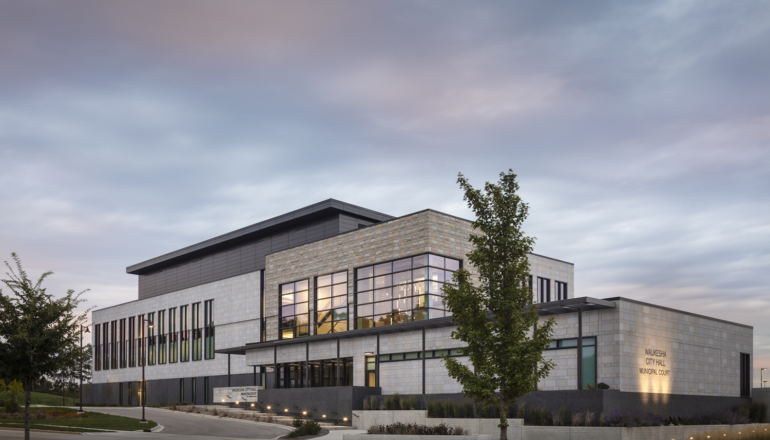
City Hall is brand new; why shouldn’t residents come to it?
It is counterintuitive to take a newly built building and want to keep people out. As I previously mentioned, the pandemic has just concluded, and the rationale was not to ensure everyone’s health and safety, but rather to highlight the outdated nature of a physical city hall. We live in a time where people have computers in their pockets all the time and can easily figure out information wherever they are. While there still isn’t a better thing than talking to a human when things just aren’t making sense, it’s inconvenient that you have 42.5 hours a week to potentially reach someone, and those 42.5 hours very frequently overlap your work schedule.
That’s where my mission comes in, a virtual city hall. My mission is to curate the city’s website and digital experiences to make it so someone can find all the information they need, submit applications, and pay for fees as much as humanly possible online. If you can do everything online, there should be fewer calls with questions, fewer people in the door seeking help, and natural efficiencies in government processes—unheard of, I know.
So what is being done?
My first goal was the website. There are a few big players when it comes to municipal website CMSs and they all package information in very similar ways to allow people with little to no HTML/CSS knowledge to get information out there. This works excellent for most municipalities but was too simplistic and limiting for what I wanted to do. During the first year, I utilized my master’s degree in user experience design (UX) extensively. I took inventory of all the content we had, I reorganized the site in a way that made sense, I consolidated pages, and I held each department responsible for the content they had on the site—all done with residents in mind.
My advantage was my lack of prior experience in local government, which allowed me to approach the content from the perspective of a resident. If I don’t know what a department does by the department name, would a resident know, and in turn, how do I get their services and requirements known to the general public without someone needing a strong knowledge of an organizational chart to find information on getting a permit?
The new website launches with a new modern look. But with any good website, the content continues to change and evolve. We begin gathering feedback on the frequent questions departments receive and the difficulties they encounter in finding information. We move content, we create pages, and we add translation to 80 languages—all with the needs of the residents in mind. Our newest addition is an AI-driven search engine that scrapes information off our pages and presents it based on questions people ask. AI is still very much in its infancy, but it’s a step in the direction of the virtual city hall.
Ultimately, the mission of making it so people don’t have to come to City Hall or contact them sounds like a concept against serving people, which is what local government is all about. However, the ultimate goal is to ensure that individuals receive the necessary information and services without their knowledge. While Waukesha was developing its next strategic plan to unite the city, I was part of the employee interview panel to identify our strengths and weaknesses. During those interviews, we were tasked with defining how you know your government is doing a fantastic job, and my response was simple.
If you don’t notice government, then you know it’s likely doing a good job
It’s a strange thought, but if you don’t have public safety concerns, if you are driving on well-maintained roads, if you are notified about things going on, if your garbage and recycling are being collected, or if you can easily pay your bills, then you don’t really have to interact with your municipality, and you likely think they’re doing a good job.
That’s really the cornerstone of a virtual city hall. Make it so the resident’s life is simple and that they don’t have to interact with government. As a public servant, my goal should be to support retirees with ample time, individuals juggling multiple jobs, and families with multiple working parents, enabling them to engage with their local government at their convenience. Someone should be able to apply for a permit at 2pm or 2am, pay for a parking pass whenever they want, or report a concern about anything without picking up a phone and talking to someone or taking time off from work to come into city hall.
That’s what drives me to do things at work, and it will inspire innovation. As with all things, though, money and availability of resources are always a challenge, but as long as there is a resident that has a need that could be better met, there is always an opportunity to improve.
The views and opinions expressed in this blog post are solely my own and do not necessarily reflect the views, opinions, or policies of the City of Waukesha. Any content shared here is for informational purposes only and should not be considered official guidance or endorsement from my place of work.
 Design Portfolio for Andrew Noffke